
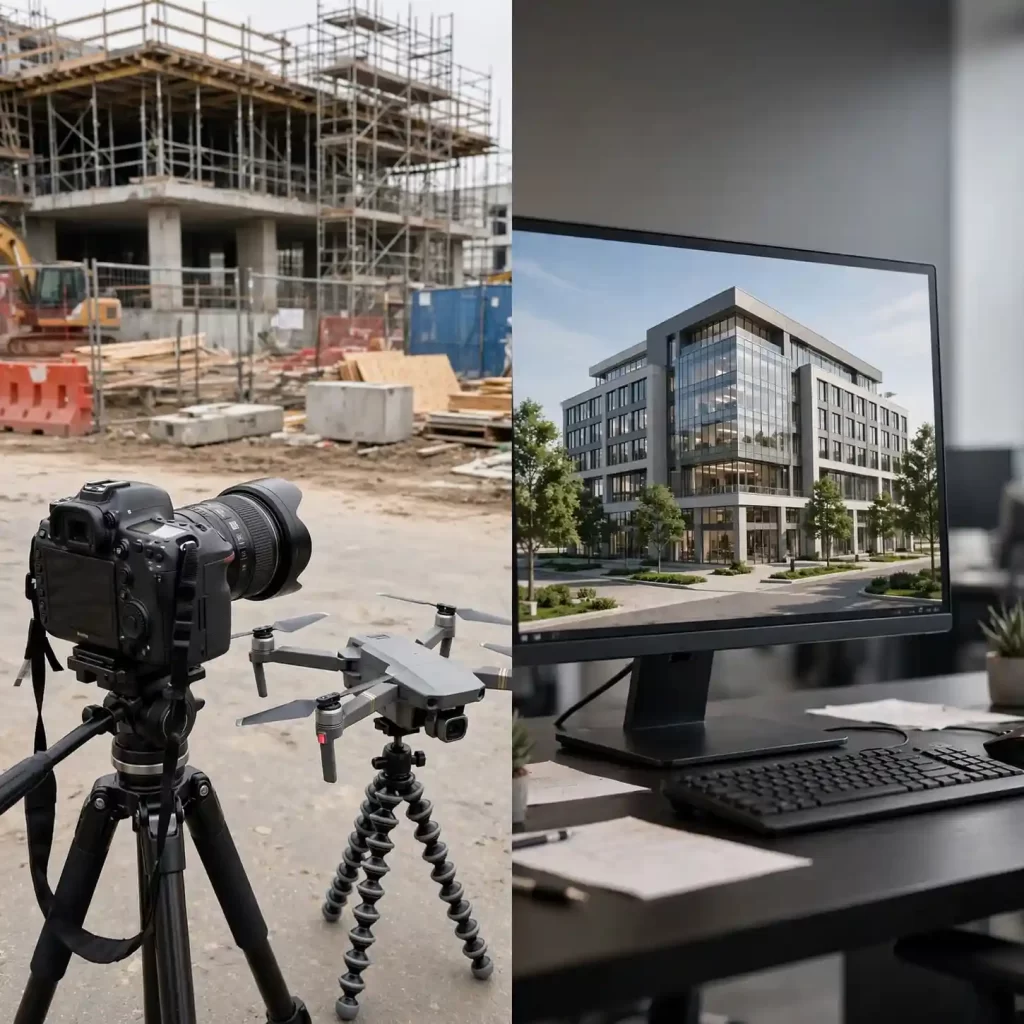
When comparing 3D rendering vs architectural photography ROI, 3D exterior rendering consistently delivers a higher return for pre-construction marketing because it eliminates the sunk cost of a finished building before any imagery can be captured. Architectural photography, by contrast, only becomes viable after substantial completion, which delays revenue-generating marketing by months or even years. For developers weighing both options, the deciding factor isn’t image quality alone – it’s when in the project timeline that visual asset needs to exist.
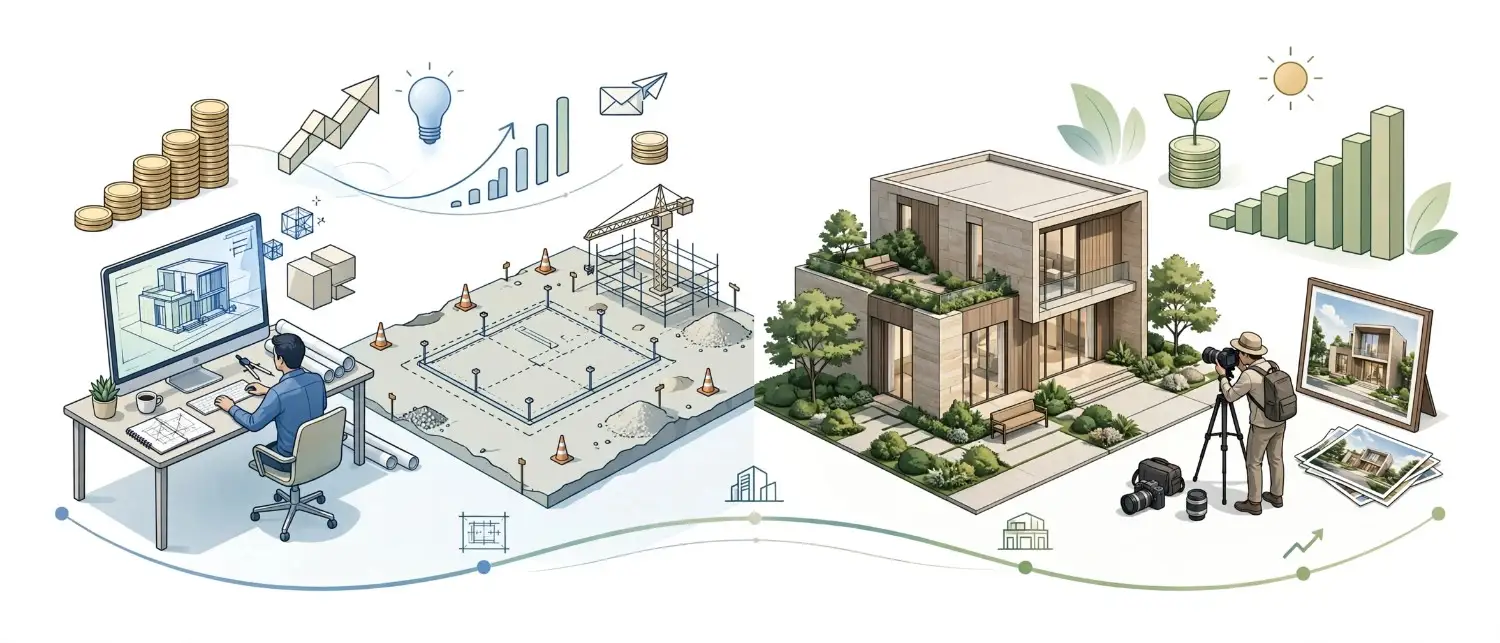
That single distinction – timing versus a finished asset – drives almost every cost, revision, and conversion metric discussed in this guide. Real estate developers, marketing directors, and architecture firms increasingly need to justify every dollar spent on visual assets, and understanding 3D exterior rendering as a distinct financial instrument, rather than a simple design nicety, is the first step toward making that case. Below, we break down the real, line-item economics of both approaches so you can decide – project by project – which one earns its keep.
What is 3D Exterior Rendering vs. Architectural Photography?
Before comparing dollars and cents, it helps to define the terms plainly.
3D exterior rendering is a computer-generated visualization of a building, created from architectural drawings, CAD files, or BIM models. It simulates lighting, materials, landscaping, and context before a single brick is laid.
Architectural photography is the professional capture of a physical, completed (or nearly completed) structure using cameras, lenses, drones, and lighting equipment on location.
The core operational difference:
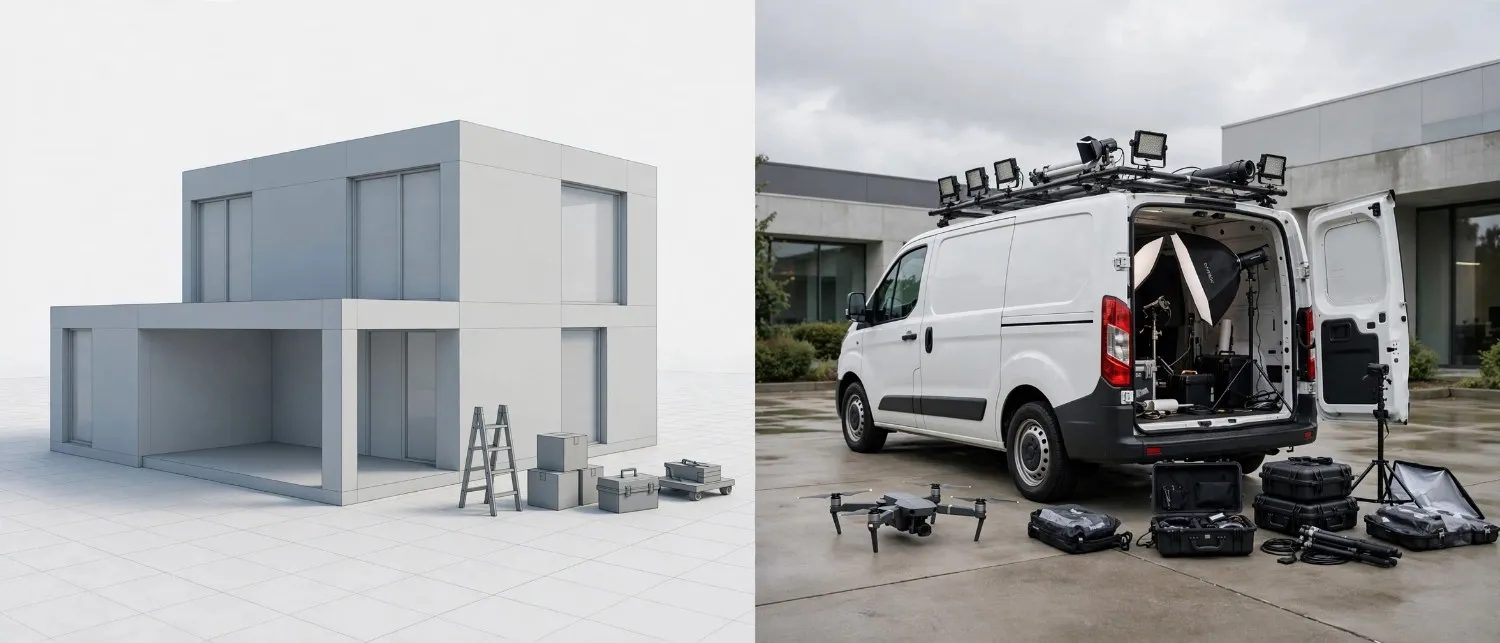
- 3D rendering requires design data, not a physical site.
- Architectural photography requires a physical site, favorable weather, and a completed or staged structure.
This single distinction cascades into every ROI calculation that follows.
The ROI Framework: How to Measure Value Beyond Sticker Price
Most developers compare these two services on quote price alone. That’s an incomplete picture. A proper ROI framework accounts for four variables:
Time-to-market
How soon the asset can be used in marketing or sales collateral.
Revision cost
What it costs to update the asset when the design or unit mix changes.
Marketing lifespan
How long the asset remains usable and accurate.
Conversion contribution
How directly the asset supports pre-sales, financing approval, or leasing velocity.
Once you weigh cost against these four factors instead of price alone, the 3D rendering vs architectural photography ROI conversation looks very different from a simple invoice comparison.
Cost Comparison: Line-Item Breakdown
Here’s a realistic breakdown for a mid-size residential or mixed-use exterior project. Figures are illustrative and will vary by market and scope; for a full itemized quote structure, see our 3D exterior rendering cost and price guide.
| Cost Factor | 3D Exterior Rendering | Architectural Photography |
|---|---|---|
| Base production cost | Fixed per image/angle | Fixed per day/shoot |
| Travel and site logistics | None required | Crew, equipment transport, permits |
| Weather dependency | None | High – reshoots common |
| Revision cost after design change | Low to moderate | Requires full reshoot |
| Pre-construction availability | Yes, fully available | Not available |
| Post-completion touch-ups | Optional | Often required (staging, cleanup) |
| Typical turnaround | Days | Days, but only after building exists |
The single biggest cost variable most developers overlook is reshoot risk. A rained-out photography day, an unfinished landscaping package, or a unit still under drywall can silently double the effective cost of an architectural photography engagement.
Timeline and the Pre-Construction Advantage
This is where 3D rendering vs architectural photography ROI diverges most sharply. Rendering can begin the moment schematic design or design development drawings exist – often 12 to 24 months before a shovel hits the ground. Photography cannot begin until the building substantially exists.
For developers running pre-sales or pre-leasing campaigns, this gap is not a minor inconvenience; it’s the difference between financing a project on schedule or stalling absorption targets. Our breakdown of the real estate developer 3D exterior rendering stages walks through exactly when in the entitlement and construction timeline renders typically get commissioned.
Consider a typical mixed-use project timeline:
Design development (Month 0-3)
Renderings commissioned and produced.
Pre-sales launch (Month 3-6)
Renderings used in brochures, digital ads, and sales galleries.
Construction (Month 6-18)
Renderings continue supporting marketing; no photography possible yet.
Substantial completion (Month 18-20)
Photography finally becomes viable.
Move-in/lease-up (Month 20+)
Photography supplements renderings for final marketing push.
Notice that photography only enters the picture in step 4 – meaning a developer relying solely on photography has no visual marketing asset for roughly 80% of the sales cycle.
Flexibility and Revisions: Adapting to Design Changes
Design changes are constant – unit mixes shift, facade materials get value-engineered, and landscaping plans evolve. With 3D rendering, updating an image to reflect a material swap or a floor plan revision is typically a matter of re-rendering from the existing 3D model, since the underlying geometry and camera setup already exist.
Architectural photography offers no such flexibility. Once a shoot is complete, changing the building’s actual materials, colors, or landscaping means the photographs are simply outdated. There is no way to “revise” a photograph of a building that no longer looks the way it was photographed. For a deeper look at how these revisions fit into a broader visualization workflow, see our guide to the 3D exterior rendering workflow.
Marketing Performance: Pre-Sales, Digital Campaigns, and Multi-Channel Use
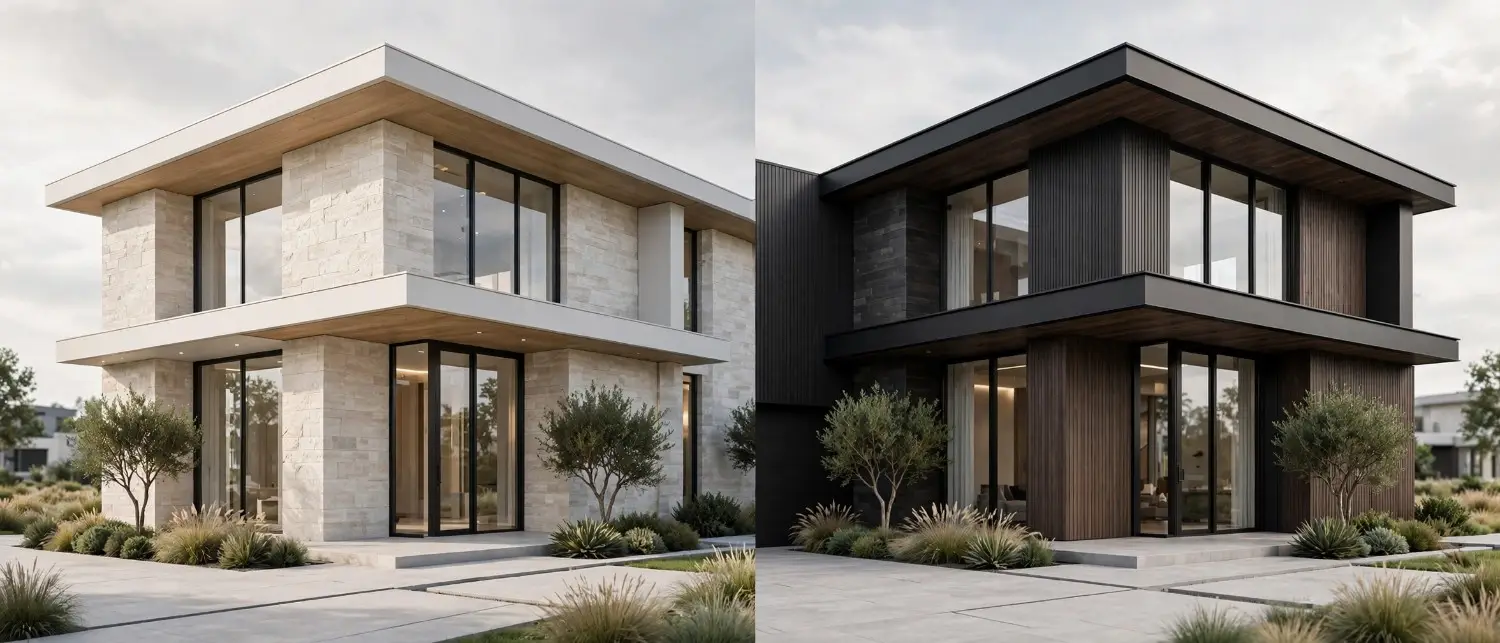
Marketing teams don’t just need an image – they need an asset that performs across channels: sales galleries, programmatic digital ads, social media, and printed collateral. Renderings are inherently more adaptable here because they can be generated at custom angles, times of day, and seasonal contexts that a physical shoot may never be able to capture (a snowy winter exterior in July, for instance, or an aerial angle blocked by adjacent construction cranes).
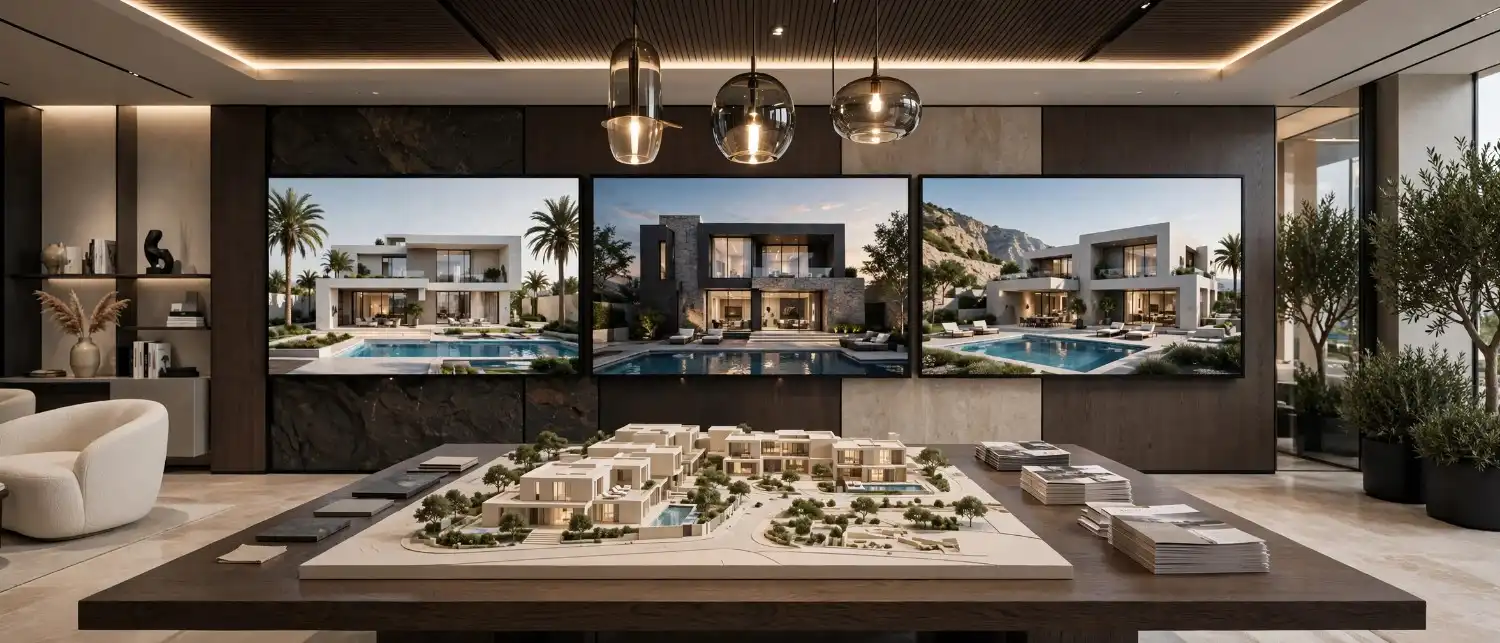
Our analysis of how 3D exterior renderings are used in real estate pre-sales campaigns shows that rendering-led campaigns typically launch marketing 6 to 18 months earlier than photography-dependent campaigns, directly compressing the sales cycle.
Key marketing advantages of rendering:
- Custom camera angles unavailable on a real site (blocked views, drone restrictions, neighboring structures)
- Controlled lighting – golden hour, twilight, or daylight shots on demand
- Seasonal variation without waiting for the actual season
- Ability to visualize landscaping maturity years in advance
Photography’s marketing advantage appears later in the cycle: it builds trust and credibility once buyers can see the completed building matches what was promised, which is valuable for closing final units or supporting resale/appraisal documentation.
Quality Control: Weather, Lighting, and Staging Variables
Architectural photography is highly sensitive to variables outside anyone’s control – overcast skies, harsh midday sun, incomplete landscaping, construction debris, or parked vehicles in frame. Professional photographers mitigate this with scheduling buffers, but buffers cost money and time.
3D rendering removes these variables entirely. Lighting, weather, staging, and even the season can be art-directed precisely to match brand guidelines, with no reshoot risk. This is one of the quieter but most consistent contributors to a better 3D rendering vs architectural photography ROI outcome, since it converts an unpredictable cost (weather delays) into a fixed, predictable one.
Environmental and Lifecycle Considerations
There’s also a lifecycle dimension worth noting. Rendering production has a smaller physical footprint – no travel, no equipment shipping, no site visits – which can matter for developers tracking sustainability metrics across their marketing operations. Photography, while more resource-intensive to produce, does offer one advantage renderings can’t replicate: authentic, verifiable proof that the building exists and matches its marketing.
Comparison Table: 3D Rendering vs. Architectural Photography, Side by Side
| Factor | 3D Exterior Rendering | Architectural Photography |
|---|---|---|
| Available before construction | Yes | No |
| Revision cost after design change | Low | High (reshoot required) |
| Weather dependency | None | High |
| Custom angles/lighting | Fully controllable | Limited by site conditions |
| Best used for | Pre-sales, financing decks, pre-leasing | Final marketing, press, resale listings |
| Builds buyer trust via realism | Strong, improving yearly | Strongest — it’s the real building |
| Typical ROI window | Immediate, pre-construction | Deferred, post-completion |
Real-World Scenarios: When to Use Each (Or Both)
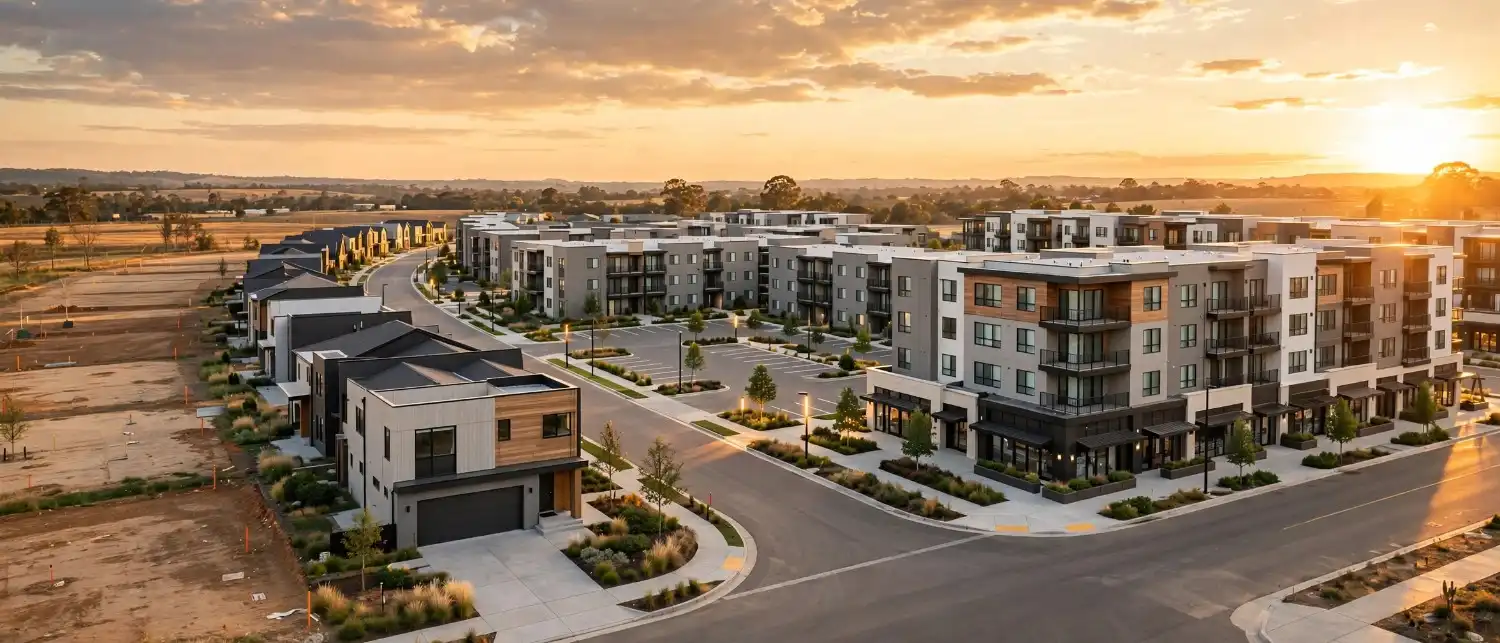
Not every project calls for the same mix. Here’s how the decision typically plays out across property types:
- Single-family home builders launching a new subdivision before model homes exist rely almost entirely on rendering for early lot reservations. See our guide on 3D exterior rendering for single-family home builders for phase-specific examples.
- Purpose-built rental communities often need renderings through the entire pre-leasing window, then transition to photography once units are move-in ready – covered in our piece on 3D exterior rendering for purpose-built rental communities.
- Mixed-use and commercial developments typically run both in parallel: renderings drive early leasing and investor decks, while photography supports grand-opening PR and long-term brand assets.
In nearly every case we’ve observed, the highest-performing marketing campaigns don’t choose one over the other – they sequence rendering first, then transition to photography once the asset exists to photograph.
Common Mistakes Developers Make When Choosing Between the Two
- Waiting for photography before launching any marketing. This wastes the highest-intent, earliest phase of the sales cycle.
- Commissioning renderings too late in design development, forcing rushed timelines and limited revision windows.
- Treating renderings as disposable once photography becomes available, instead of retaining them for financing decks, permitting submissions, or future phases.
- Underestimating reshoot costs when budgeting photography, then blowing the marketing budget mid-campaign.
- Using outdated renderings after a material or landscaping change without commissioning an update.
Expert Tips for Maximizing ROI
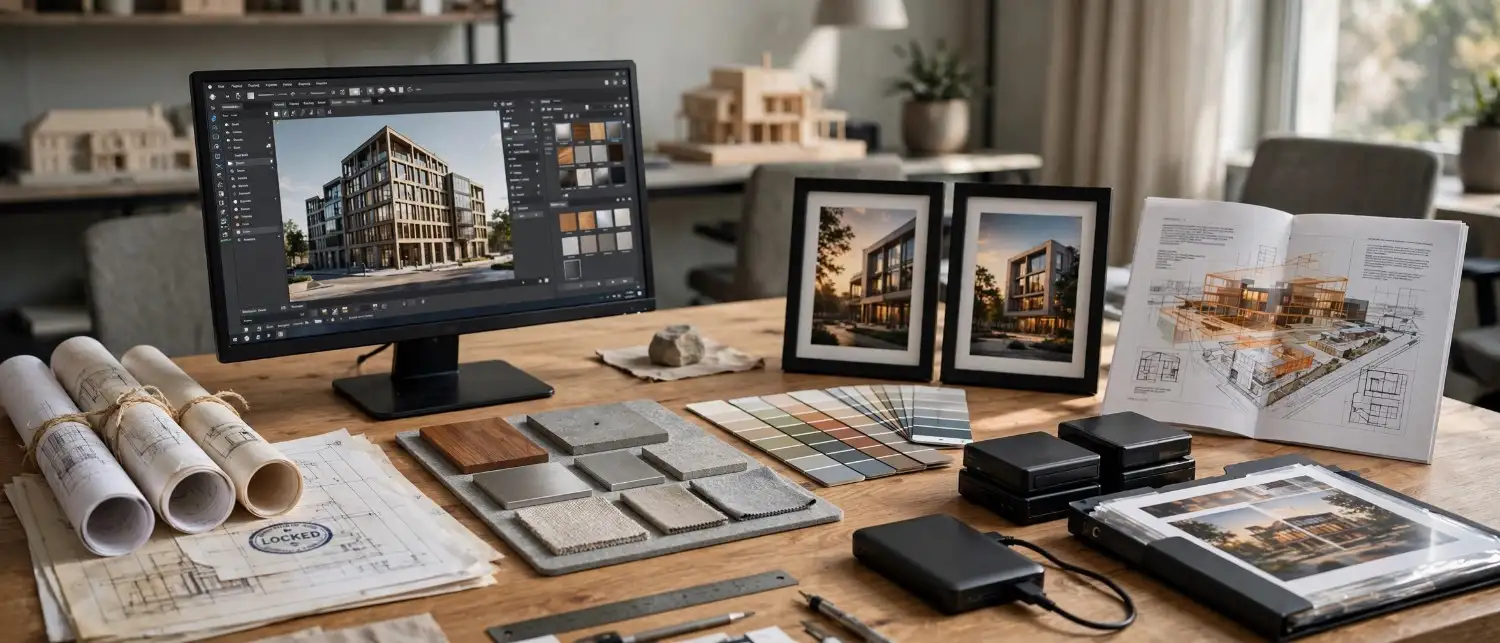
- Commission renderings as soon as design development drawings are locked, not after full permitting – this maximizes the pre-sales marketing window.
- Budget for at least one rendering revision cycle to account for value engineering changes; it’s far cheaper than a photography reshoot.
- Keep renderings and photography from the same brand style guide (color grading, framing conventions) so the transition between the two feels seamless to buyers.
- Use renderings for investor and lender decks even after photography is available – renderings can show future phases that don’t exist yet.
- Archive high-resolution renders even post-completion; they remain useful for future marketing of adjacent phases or renovation projects.
Step-by-Step: How to Decide Which Delivers Better ROI for Your Project
- Identify your marketing launch date relative to your construction timeline.
- If launch predates substantial completion, 3D rendering is your only viable option – budget accordingly.
- Map your expected design change frequency. High-change environments favor rendering’s low revision cost.
- Estimate your reshoot risk for photography based on regional weather patterns and site complexity.
- Plan a transition point where photography takes over once the building is substantially complete.
- Budget both line items separately rather than treating them as competing options for the same dollars – in most full-cycle campaigns, they’re complementary, not either/or.
Frequently Asked Questions
Does 3D rendering or architectural photography have better ROI for real estate marketing?
For pre-construction and pre-sales marketing, 3D rendering delivers better ROI because it’s available months or years before photography is possible, capturing early-stage buyer interest and financing support.
Can architectural photography replace 3D rendering entirely?
No. Photography requires a completed or near-completed structure, so it cannot support any marketing activity that happens before or during construction.
Is 3D rendering as convincing as a real photograph to potential buyers?
Modern photorealistic rendering has closed much of the visual gap with photography, and when produced by an experienced studio, most buyers cannot distinguish a well-executed render from a photograph at typical viewing distances and resolutions.
How much does a 3D exterior rendering typically cost compared to a photography shoot?
Costs vary by scope and market, but rendering avoids variable costs like travel, weather delays, and reshoots, which often make photography the more expensive option once contingencies are included. Our cost and price guide breaks this down in detail.
When should a developer switch from rendering to photography in a marketing campaign?
Most developers transition once the building or unit is substantially complete and staged, using photography to reinforce the promises made earlier through rendering.
Conclusion
The 3D rendering vs architectural photography ROI question rarely has a single winner – it has a timing answer. Rendering wins decisively for every phase before a building physically exists, while photography earns its place once that building is real and ready to be shown off. Developers who sequence the two deliberately, rather than defaulting to whichever feels more “final,” consistently see faster pre-sales absorption, lower reshoot costs, and marketing assets that stay accurate through every design revision.
If you’re planning a launch timeline and want a rendering partner that understands how to sequence these assets for maximum ROI, explore our 3D rendering services and get a project-specific quote before your next design milestone.