
Trusted by 1,250+ Architects, Developers & Real Estate Professionals
exterior-rendering-lifecycle

Types of Exterior Rendering Techniques: Still, Aerial & Street-Level

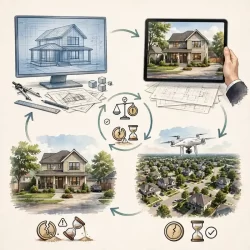
The three primary types of exterior rendering techniques are still-image renders (fixed-camera photorealistic views), aerial renders (bird’s-eye or drone-style perspectives showing site context and massing), and street-level renders (eye-height, pedestrian-perspective views that simulate the real-world approach to a building). Each technique serves a distinct purpose across marketing, planning approval, and design validation, and most real[…]
featured-ai-3d-exterior-rendering-reshaping-design

How AI 3D Exterior Rendering is Cutting Turnaround Time and Boosting Realism for Developers.

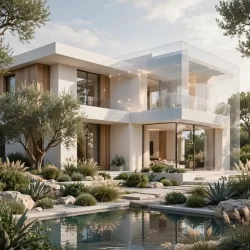
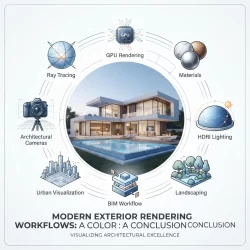
AI 3D exterior rendering uses machine learning models, neural denoising, and generative design tools to compress traditional rendering pipelines from days into hours while improving photorealism. Architects and developers now pair AI upscaling, real-time ray tracing, and generative material libraries with human-led art direction to produce marketing-ready visuals faster than conventional CPU or GPU rendering[…]

best-rendering-engine-summary

Best Rendering Engines for Exterior Architectural Visualization: A Technical Comparison

The best rendering engines for exterior visualization in 2026 are V-Ray, Corona Renderer, Lumion, Enscape, Twinmotion, and D5 Render – each optimized for different combinations of photorealism, speed, and real-time collaboration. Studios choosing between offline biased renderers and real-time GPU engines must weigh render fidelity against production turnaround, since no single engine dominates every stage[…]